
Last updated November 21, 2026
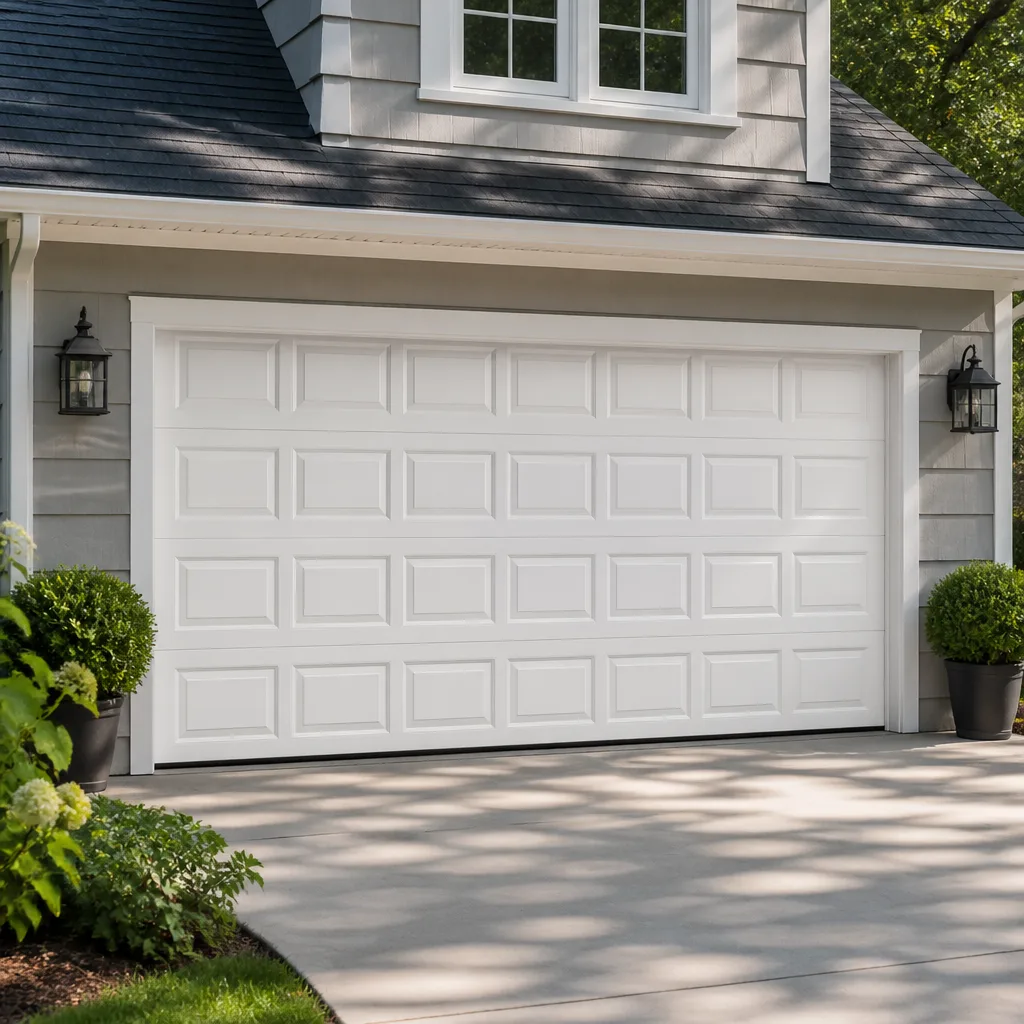 Raised-panel steel
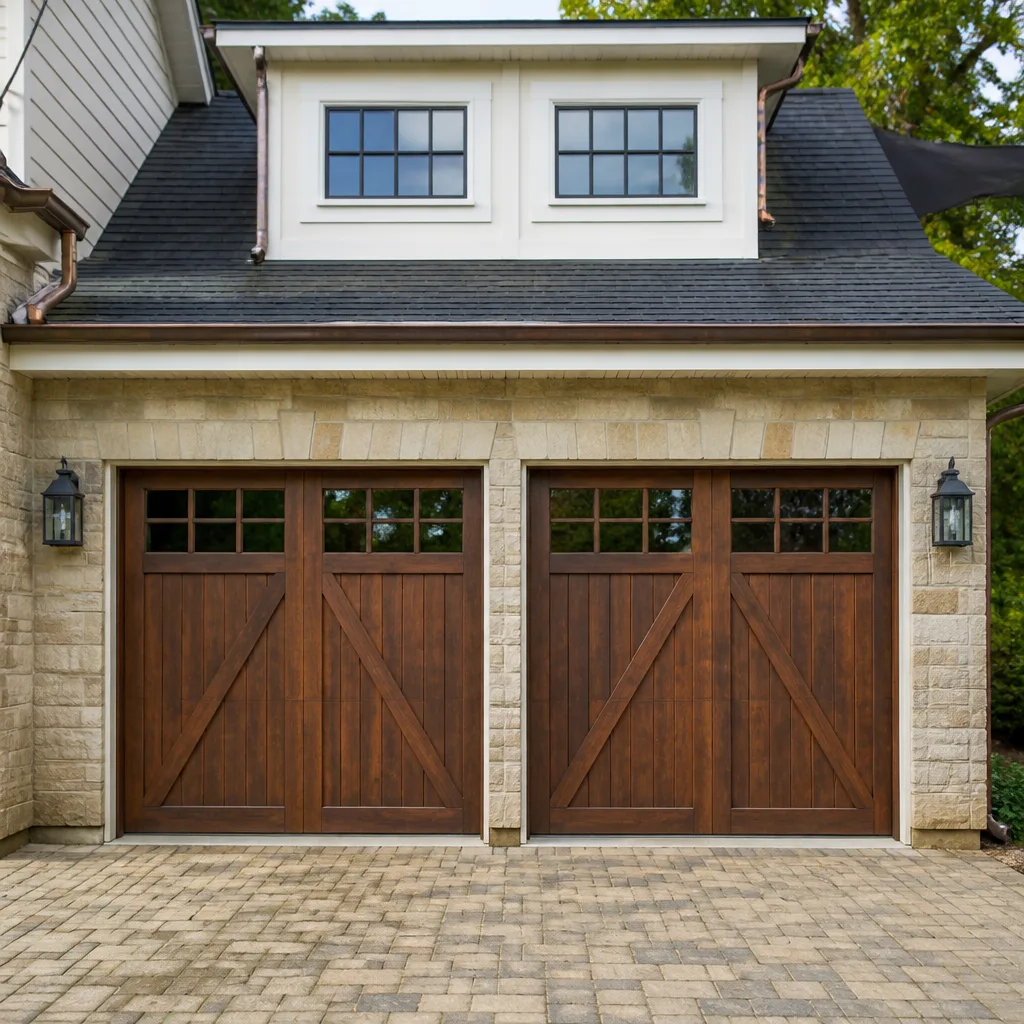 Carriage house
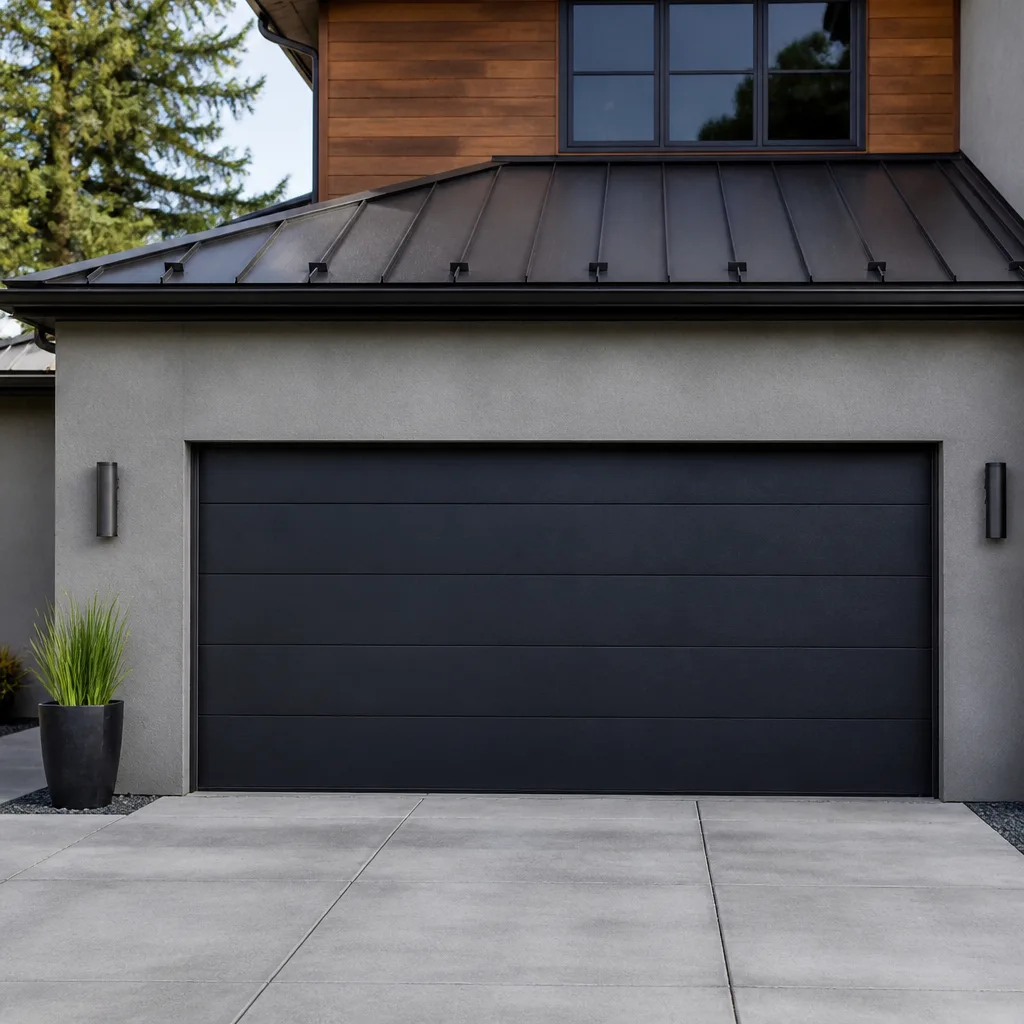 Modern flush
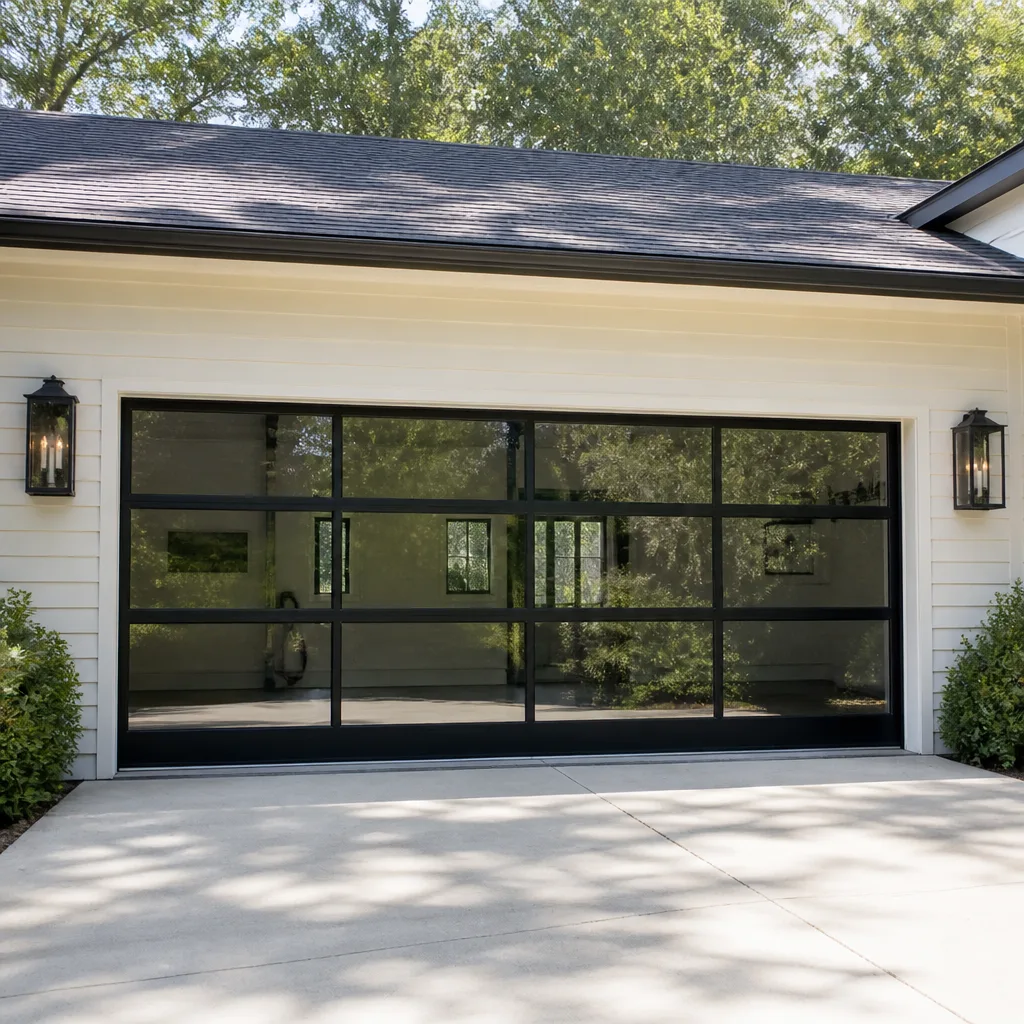 Full-view glass
 LiftMaster openers
 Chamberlain openers
Full 25-point door and opener safety check with every visit - springs, cables, rollers, tracks, and your LiftMaster or Chamberlain opener included
You get a price before we start. It does not change when the pro arrives.
Get your free estimateDIY vs Professional Garage Door: The Silver Spring Homeowner’s Decision Guide
Most guides to garage door repair treat the entire door system as one big hazard and tell you to call a professional for everything. That’s over-warning, and it’s not honest. The truth is more useful: a torsion spring under full tension stores enough energy to break a wrist or worse in under a second, but lubricating rollers, adjusting the open-limit screw on your opener, or swapping a worn bottom seal are genuinely safe homeowner jobs. The real question isn’t whether you’re handy enough. It’s whether the specific task you’re about to do carries catastrophic injury risk. This guide sorts every common garage door task into three categories and shows you where the line falls in Silver Spring.
Quick Answer
DIY is reasonable for maintenance and minor adjustments – lubrication, weather seals, roller swaps, opener limit and force settings, and visual inspections. Anything involving torsion springs, extension springs, cables, or the counterbalance system should go to a trained professional, full stop, because the stored energy can injure or kill regardless of skill level. Silver Spring homeowners on 1960s to 1980s ranch homes should be extra cautious because those older doors often use non-standard spring and cable configurations that make even a “simple” swap unpredictable.
Styles & brands we work with
- Raised-panel steel
- Carriage house
- Modern flush
- Full-view glass
- LiftMaster openers
- Chamberlain openers
Table of Contents
- The Three Risk Buckets Every Garage Door Task Falls Into
- Task-by-Task: What’s Safe, What’s Risky, What’s Never DIY
- Why Springs Are Different: The Tools and Knowledge Gap
- How Silver Spring’s Older Housing Stock Changes the Math
- Real Cost Comparison: DIY vs Professional for the Five Most Common Repairs
- What You Can Safely Do Between Service Calls
- Openers: Where DIY Makes Sense and Where It Doesn’t
- Warranties, Liability, and the Hidden Cost of a Botched Job
The Three Risk Buckets Every Garage Door Task Falls Into
Garage door work isn’t one skill tier. It’s three, and they don’t overlap the way most people assume. A person who’s rebuilt an engine can still get badly hurt on a torsion spring because the danger isn’t about technical difficulty – it’s about stored mechanical energy and the specific tools required to release it safely. A person who’s never picked up a wrench can still safely lubricate rollers in twenty minutes.
Here’s how we sort the work:
- Safe for homeowners: lubrication, weather seal replacement, bottom seal replacement, roller replacement on non-tensioned sections, visual inspection, opener programming, opener limit and force adjustment, safety sensor alignment, track cleaning, and tightening exposed bolts.
- Risky but doable with training: track adjustment on a door that’s sagging or misaligned, panel replacement on a sectional door, and opener rail or belt replacement. These can be done correctly by a careful homeowner, but they’re easy to do wrong, and a wrong adjustment puts load back on the springs where it doesn’t belong.
- Never DIY: torsion spring replacement or adjustment, extension spring replacement or adjustment, cable replacement, bottom bracket work, and drum replacement. Anything that releases the counterbalance tension falls here.
The classification matters because Google is full of tutorials that gloss over the boundary. A homeowner reading a “how to fix your stuck garage door” article may end up backing off a torsion cable without realizing they’ve just released a system that was holding several hundred pounds of door weight. We’ve seen the results of that mistake, and it doesn’t look like a small repair bill.
One more distinction worth naming: a garage door is your home’s largest moving part. It cycles thousands of times over its life and carries load every time it moves. That’s why the boundary between “safe to DIY” and “call a pro” runs through specific mechanical components, not the whole system.
Task-by-Task: What’s Safe, What’s Risky, What’s Never DIY
Here’s the full classification in one place. Use this table when you’re deciding whether to pick up a wrench or pick up the phone.
- Lubricate hinges, rollers, and tracks – Safe. No stored energy involved. Use a silicone-based or lithium grease spray, not WD-40, and avoid the tracks themselves (grease attracts grit on tracks and can cause binding).
- Replace bottom seal – Safe. The door stays in place. Keep the door fully open and locked during the swap. Measure the old seal and match the profile.
- Replace rollers – Safe if the door is down and springs are untouched. Rollers are not under counterbalance tension. Never attempt this with the door open.
- Adjust opener open-limit and close-limit screws – Safe. These are the two screws on the opener body that set how far the door travels. A few quarter-turns at a time, then test.
- Align safety sensors – Safe. Sensors near the floor on both sides of the opening. When the indicator light is solid on both, they’re aligned.
- Reprogram remotes and keypads – Safe. Follow the manufacturer’s sequence. Chamberlain, Genie, LiftMaster, and Craftsman all use similar patterns but different button combinations.
- Replace opener belt or chain – Risky but doable with training. You need to understand the rail assembly and adjust the tension correctly.
- Replace a bent section or panel – Risky but doable with training. Doable on a single section. If the tracking is also bent, it’s a professional job.
- Adjust track back into alignment – Risky but doable with training. Needs to be done with the door down and no spring load on the door, or the door can come off the track.
- Replace torsion spring – Never DIY. Requires winding bars, knowledge of winding direction, and the ability to count turns precisely. A slip can break a wrist or worse.
- Replace extension spring – Never DIY. Even though extension springs look less intimidating, they snap without warning when released incorrectly.
- Replace lift cables – Never DIY. Cables are under tension tied directly to the springs. Cut them under load and they whip.
- Bottom bracket removal or replacement – Never DIY. The bottom bracket anchors the cable. Under load, it can fly off with enough force to break bones.
- Replace cable drums – Never DIY. Drums are the mechanism that spools the cable and translates spring tension into lift.
If you look at that list and the “never DIY” column looks short, look again at what’s in it. Those five items are the failures that put homeowners in the emergency room. They’re also the items that fail most often on aging doors. That’s the collision this decision guide exists to address.
Why Springs Are Different: The Tools and Knowledge Gap
A torsion spring stores energy the way a wound clock spring does, except it’s holding the weight of a door that can be several hundred pounds. When it’s under tension and something releases it wrong, the energy discharges in a fraction of a second. There’s no warning, no creak, no chance to step back.
Here’s what separates a safe spring job from an unsafe one:
- The right winding bars. Not a screwdriver. Not a piece of rebar. Winding bars are made of hardened steel sized precisely to the winding cone, and using anything else is how people get hurt.
- Understanding of winding direction. Left-wound and right-wound springs look similar but are mirror images. Get it wrong and the spring can unwind violently.
- Knowing how to count turns. Spring tension is set by the number of quarter-turns. Too few and the door won’t balance. Too many and the spring is overstressed and can snap early.
- Recognizing mismatched springs. Many older doors have a pair of springs that don’t match (different wire gauge, different length, or one already replaced). Mismatched pairs stress both springs and can cause premature failure.
- Safety restraint and containment awareness. Extension springs need restraint cables as a backup. Torsion springs need the correct shaft and bearing plate configuration so failure doesn’t send the spring across the garage.
None of those are about handiness. They’re about tools and specific knowledge that most homeowners don’t have and don’t need to acquire. That’s why we treat garage door spring repair as a distinct service rather than blending it into general repair – it’s a different job with different stakes.
One more thing about springs that every homeowner should know: when one spring on a matched pair breaks, the other one is usually at the same point in its fatigue life. Replacing one and leaving the other is a common DIY shortcut that usually means the second spring fails within a few months. Do both at once, with the right parts, from someone who’s done the job enough times to know what balanced actually feels like.
How Silver Spring’s Older Housing Stock Changes the Math
Silver Spring’s housing was largely built between the 1960s and the 1980s, and that period produced a lot of ranch homes in neighborhoods like Kemp Mill, Woodmoor, Four Corners, and the areas around Sligo Creek. That vintage matters here because the garage door systems installed on those homes were built before standardized parts became the norm.
What that means in practice:
- Non-standard spring diameters. Older doors may use springs with wire gauges and inside diameters that don’t match what’s on the shelf at a big-box store today. A homeowner buying a “replacement spring” from a parts retailer often discovers the original doesn’t match the size or wire gauge.
- Extension springs without restraint cables. Plenty of Silver Spring doors built in that era never had restraint cables added. If an extension spring fails without one, it can fly into the garage. Adding restraint is a professional job, not a homeowner one.
- Multiple door generations on the same street. In neighborhoods like Woodmoor, some homes still have the original door, some have been replaced in the 1990s, and some are on their second or third replacement. A “simple” repair depends heavily on which generation you’re dealing with.
- Ranch homes with low-clearance ceilings. Low headroom setups sometimes use double-torsion or reverse-wound spring configurations. Those are more complex than standard setups and rarely show up in online tutorials.
- Faded or misaligned tracks from settling foundations. Silver Spring’s soils and the age of the slabs mean tracks sometimes drift out of alignment. A door that “works but drags” may be a track issue, not a spring issue.
What that adds up to for a Silver Spring homeowner: even a task that’s classified as “risky but doable with training” in our table can become unsafe if the door underneath it isn’t standard. A panel replacement that seems straightforward on a 2015 Clopay door can become a spring-loaded nightmare on a 1972 door with a mismatched spring pair. This is one of the main reasons we recommend a professional inspection for any Silver Spring home built before the late 1980s the first time you tackle a repair that involves anything tensioned.
The climate also plays in. Silver Spring summers are humid enough that seals harden and rollers gum up faster than in drier climates, and winters are cold enough that a fatigued spring is more likely to snap on the first cold morning. That weather pattern means the wear items – seals, rollers, springs, and cables – age faster than a national average suggests. It’s not a dramatic fact. It’s just the reason maintenance pays off here.
Real Cost Comparison: DIY vs Professional for the Five Most Common Repairs
The DIY-vs-pro math looks different for each repair. Here’s how it breaks down for the five most common jobs we get called for. Prices are typical estimated ranges for the Silver Spring area; your written estimate is what actually sets the price.
- Roller replacement. DIY: $20-$60 in parts (10 rollers plus lubricant) and about an hour of time. Professional: typically $120-$200 in labor and parts. Roller replacement is a safe DIY job. The path is fine either way – pick DIY if you have the time.
- Weather seal replacement. DIY: $25-$50 in parts and about 30-45 minutes. Professional: typically $100-$175. Also a safe DIY job, and the parts are easy to match at any hardware store.
- Opener repair (board, capacitor, or motor). DIY: highly variable, $60-$250 if you can diagnose the exact failed part, plus possible wrong-part returns. Professional: typically $180-$400. Opener electronics are diagnosable with a multimeter but not easy to self-diagnose without experience. A misdiagnosis doubles the cost.
- Torsion spring replacement (one spring). DIY: $50-$120 in parts if you can find the correct size, plus the winding bar investment. Professional: typically $180-$340 per spring, with a matched pair usually replaced together so a pair runs roughly twice the single-spring range. Never DIY regardless of parts cost.
- Off-track door realignment. DIY: high risk of a partial success that leaves the door scraping or stressed. Professional: typically $150-$300. Call a pro; the cost of getting it wrong is usually higher than the cost of the repair.
The DIY savings on rollers and seals are real. The “savings” on a spring job isn’t savings at all when the risk is a hospital bill. And the middle tier is where the real math happens: a homeowner who misdiagnoses an opener board spends $60 on the wrong board, then another $180 on the right one, then maybe $200 on a technician to install it – more than just calling on day one. We’ve seen that pattern enough times to say it plainly.
The five-repair view looks like this when you count the honest cost:
- Safe DIY jobs: real savings, 50-70% less than professional.
- Diagnosable opener repairs: savings only if you can confirm the failed part before ordering.
- Track adjustment: usually not worth DIY; a partial fix often gets worse over a few weeks.
- Spring jobs: no safe DIY option. The number to compare is professional estimate vs. injury risk, not professional estimate vs. parts cost.
- Cable, drum, and bottom bracket jobs: same answer as springs.
For a written estimate on any of those five, Silver Spring Garage Door Repair offers free estimates and quotes the job before work starts. That’s the number that matters in this decision, not a parts price from a website.
What You Can Safely Do Between Service Calls to Extend Component Life
There’s real value in the maintenance a homeowner can do safely. These tasks extend component life and usually don’t touch the warranty terms as long as you use manufacturer-approved parts and don’t modify the system.
- Lubricate hinges, rollers, and bearings once or twice a year. Use a silicone-based lubricant for hinges and bearings, and avoid greasing the track itself. The track should be clean and dry.
- Wipe the track with a clean cloth. No lubricant. The rollers ride metal-on-metal; grease attracts grit and speeds wear.
- Test the safety reversal once a month. Put a piece of wood between the floor and the door and close it. The door should reverse on contact. Test the photo-eye sensors by blocking them with your foot and pressing close.
- Check the balance by hand. Disconnect the opener (pull the release handle) and lift the door halfway. It should stay put. If it falls or rises on its own, the springs are out of balance and it needs a professional adjustment.
- Inspect the springs for a visible gap. A torsion spring that’s broken shows a clear gap at the coil. Don’t touch it. Call for service.
- Wash and inspect door panels for paint damage. A small paint chip can start rust at the seams. Touch up with the manufacturer’s finish color when possible, especially on Clopay and Amarr doors where finish matching is straightforward.
- Listen for new noises. A door that suddenly starts squealing, popping, or dragging is telling you something changed. Catch it early and it’s usually a small fix.
- Check the weather seal at the bottom. If you can see daylight under the door, the seal is worn. Replace it before rain or cold air gets in.
Those eight tasks take about 20 minutes twice a year. They’re the difference between a door that lasts its full expected life and one that dies early from neglect. They don’t require any tools you don’t already own, and they don’t involve any stored energy.
Openers are the same story. Checking that the safety sensors work and that the travel limits are set correctly are legitimately homeowner tasks on any LiftMaster, Chamberlain, Genie, or Craftsman unit. Belt and chain checks are safe too. Anything that opens the housing is where we’d draw the line – and for good reason, since the internal capacitor can hold a charge for a while after power is disconnected.
Openers: Where DIY Makes Sense and Where It Doesn’t
Openers get their own section because they’re the one part of the garage door system where the DIY line is genuinely blurry for most homeowners.
Here’s where the line falls:
- Safe: remote and keypad programming, safety sensor alignment, force and limit adjustments, replacing the battery in the wall unit, checking that the manual release works, testing the auto-reverse.
- Risky but doable with training: replacing a belt or chain, installing a new opener on an existing door with existing rails, replacing the wall mount control.
- Never DIY: opening the motor housing to replace a board or capacitor on a live unit, messing with the internal gear assembly, and installing a new opener on a door that hasn’t been balance-checked first.
That last never-DIY item catches people. A brand-new opener installed on a door with an out-of-balance spring will strain itself and often fail within a year. If the opener motor runs fine and the door still struggles, the spring is the problem, not the opener. Diagnosing that correctly is where we end up handling garage door opener repair for a lot of Silver Spring homeowners who assumed the opener was bad because the door was slow. It wasn’t; the springs were.
On the models we work on most – Chamberlain, LiftMaster, Genie, and Craftsman – the programming sequences are similar but not identical, and the error codes are different. Reading the flash sequence from the main unit and looking up the right code for the right brand is the fastest way to skip a wasted DIY attempt. If the code points to a board or the motor itself, it’s a professional job.
Warranties, Liability, and the Hidden Cost of a Botched Job
There’s a reason a DIY repair that works can still cost a homeowner thousands of dollars down the road: warranty terms. Most garage door manufacturers require professional installation or repair to keep the warranty intact, and a homeowner who modifies the spring or cable configuration on their own can void the warranty without realizing it. Door warranties on Clopay and Amarr systems often require authorized installation for full coverage, and a self-modified counterbalance system is usually an easy reason to deny a claim.
There’s also the liability question. If a DIY repair does something wrong that later causes damage – a door that falls, a spring that snaps and hits someone, a door that fails during a power outage – homeowner’s insurance may or may not cover it depending on how the modification happened. In our experience working with Silver Spring homeowners, this is the part nobody thinks about until after the fact. The parts savings on a DIY opener board swap don’t look like savings after a failed repair damages the rail or the door.
The honest framing is this: warranties and liability aren’t arguments to never touch the door. They’re arguments to be specific about which repairs keep the warranty intact and which ones don’t. Seals, rollers, lubricants, and opener programming are safe. Springs, cables, and internal opener electronics are not.
If you want confirmation on where your specific door sits before you start, a quick garage door repair consultation is a way to get that answer without committing to a full repair.
Common Mistakes to Avoid
- Using a screwdriver in place of winding bars. This is the number one injury cause on spring repairs. A screwdriver doesn’t fit the winding cone, and it slips under load. Use the right bar or don’t attempt the job.
- Replacing one spring on a matched pair. The other spring is at the same fatigue point and usually fails within a few months. A pair should almost always be replaced together; a single spring replacement range is not the number to budget for if both are original.
- Greasing the tracks. Lots of online videos tell homeowners to lube everything. Don’t. Grease on the tracks attracts grit and can cause the door to bind. Wipe tracks clean, lubricate the rollers.
- Installing a new opener on a door with weak springs. The opener motor will burn out trying to lift a door the springs aren’t helping anymore. Balance-check the door before you buy a new opener.
- Backing off a torsion cable to “see what happens.” That’s the release point for several hundred pounds of stored energy. If the cable needs work, that work happens with the springs unwound by someone trained to do it.
- Assuming a 1970s Silver Spring door uses standard replacement parts. Older ranch homes often have off-spec spring sizes and spring configurations that were standard for the build year but aren’t standard now. Measure before you buy.
- Skipping the annual balance check. An out-of-balance door strains the opener, the tracks, and the springs at the same time. Catching it early is usually a spring adjustment; catching it late is usually a full spring and opener repair.
See the difference
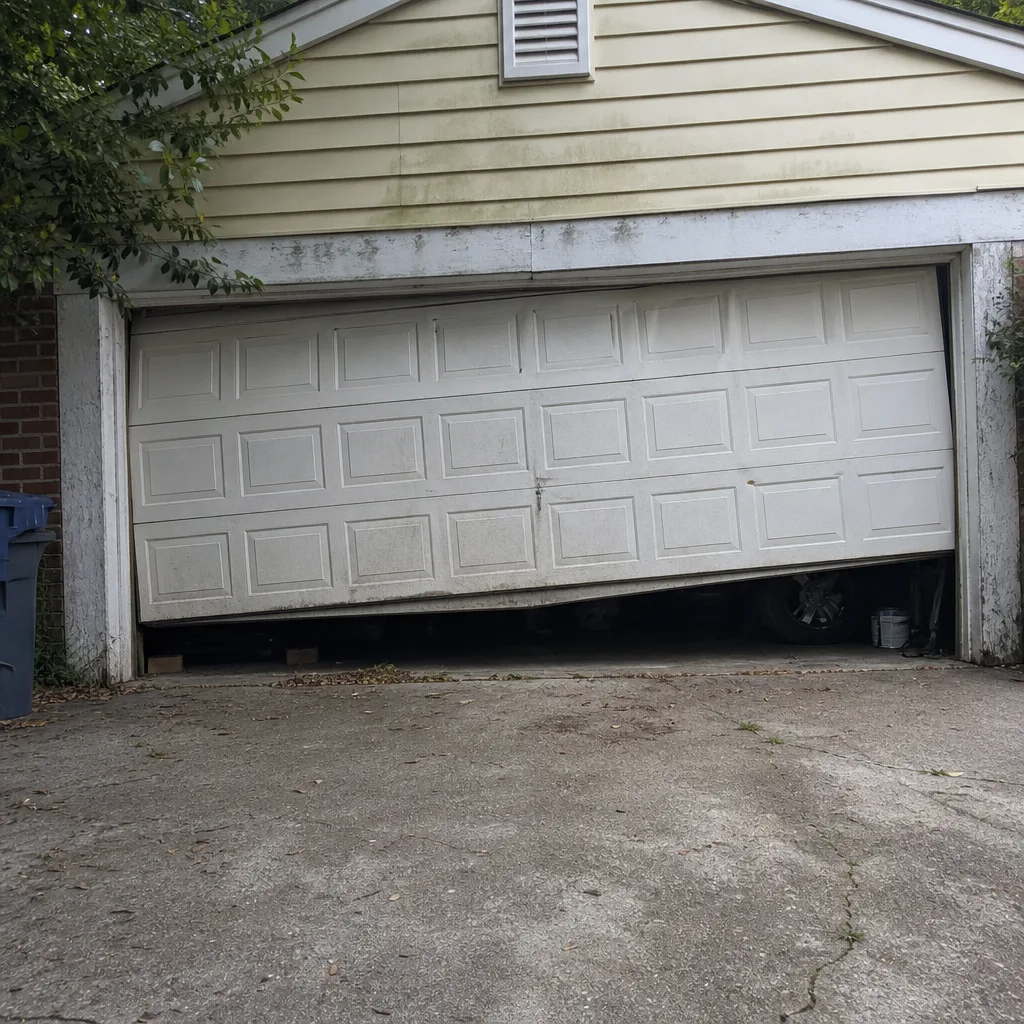 Before
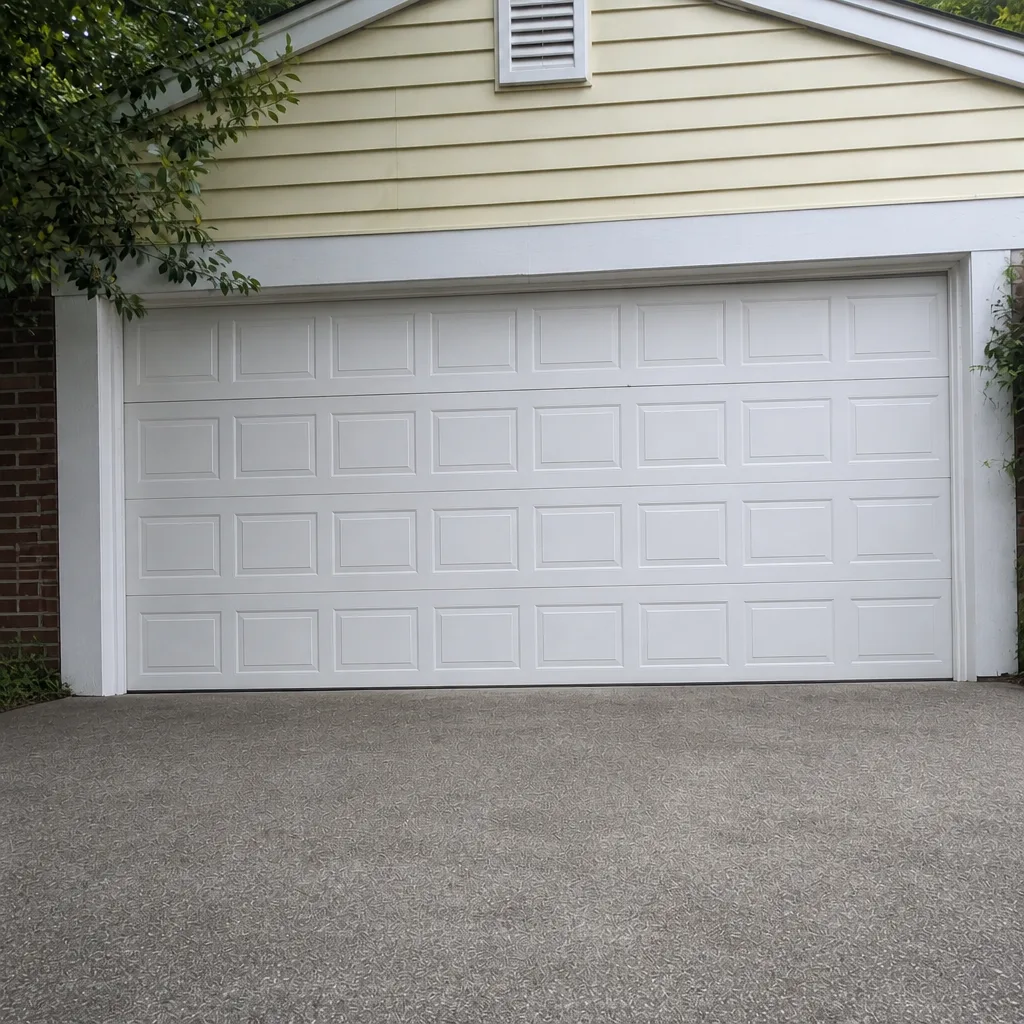 After
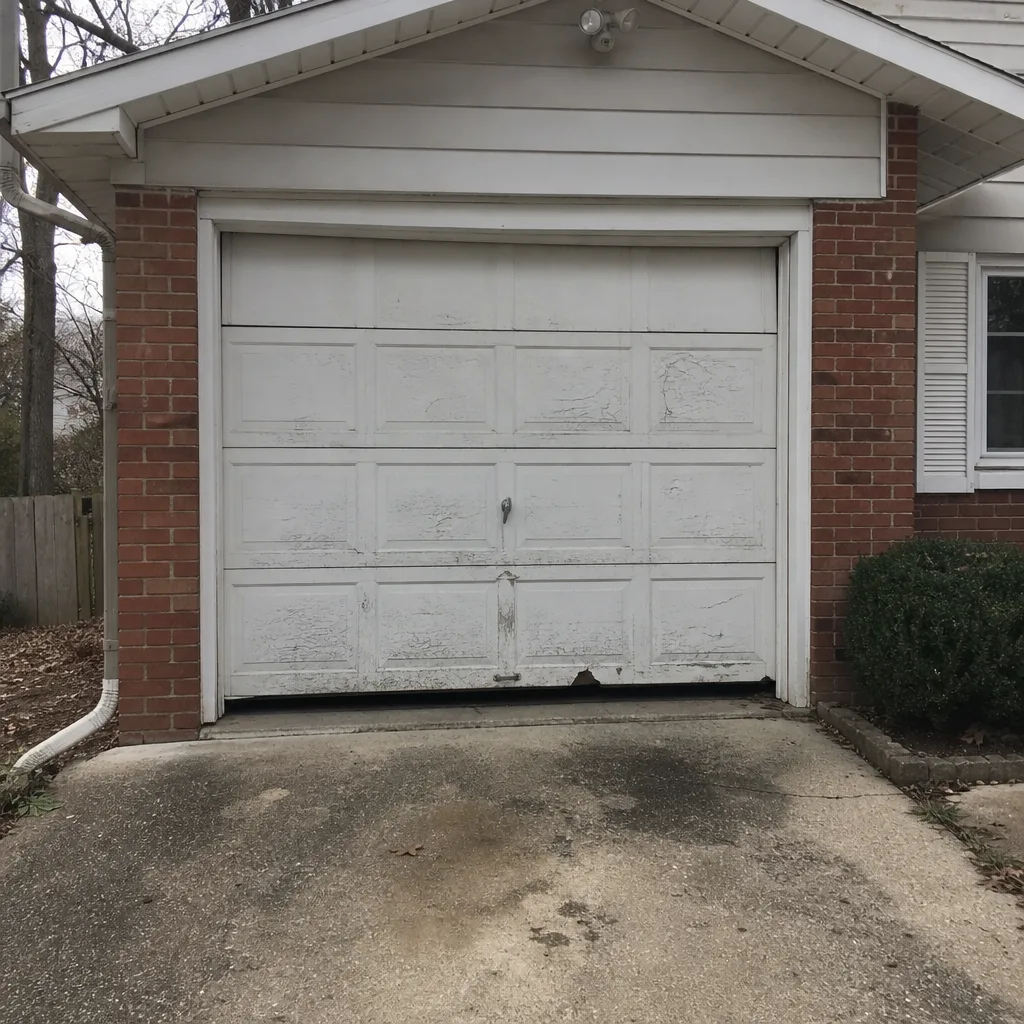 Before
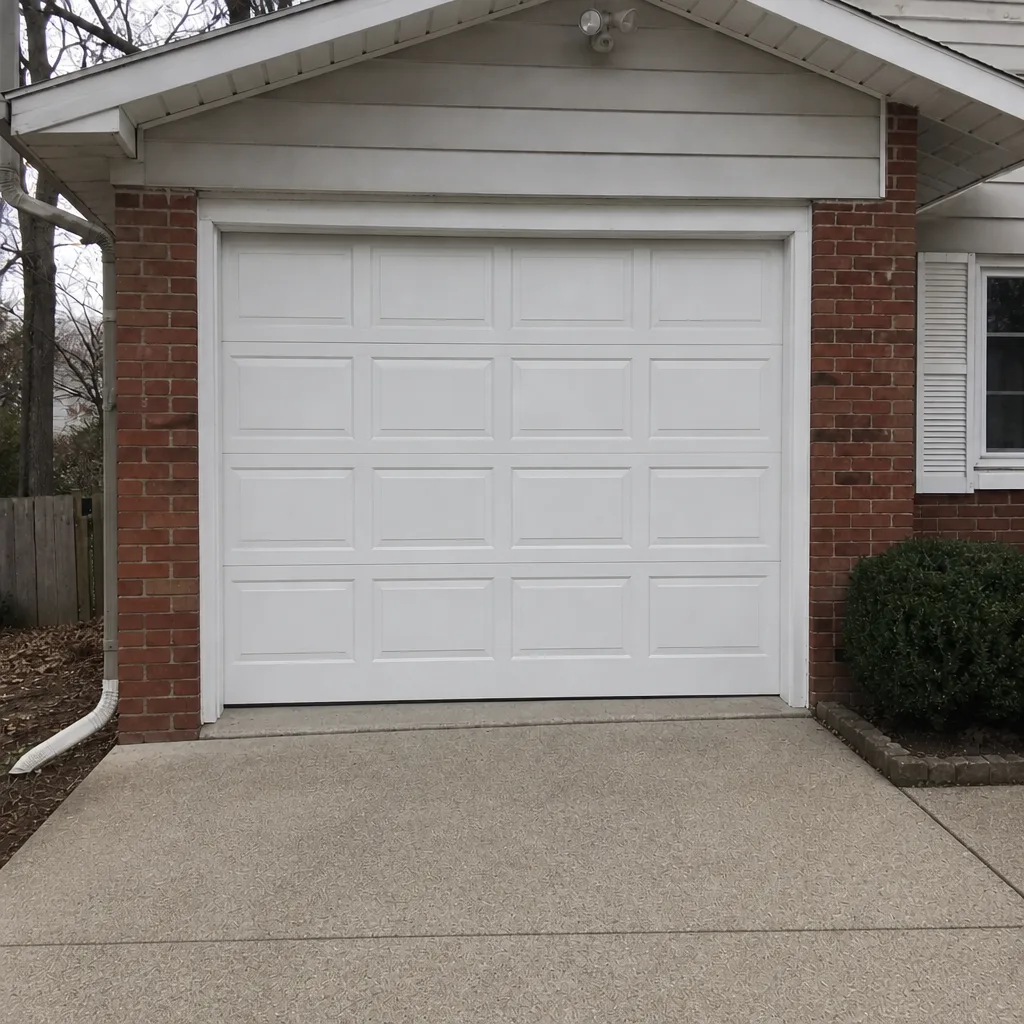 After
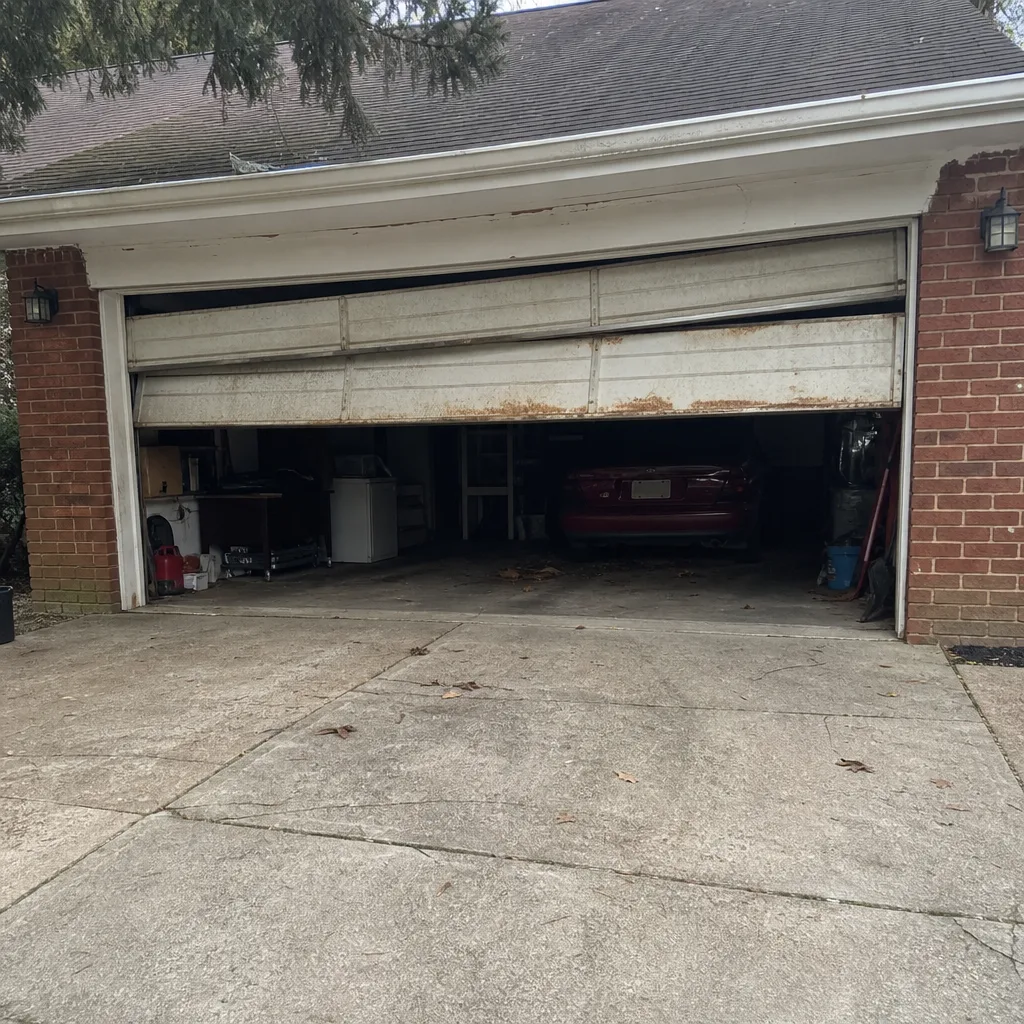 Before
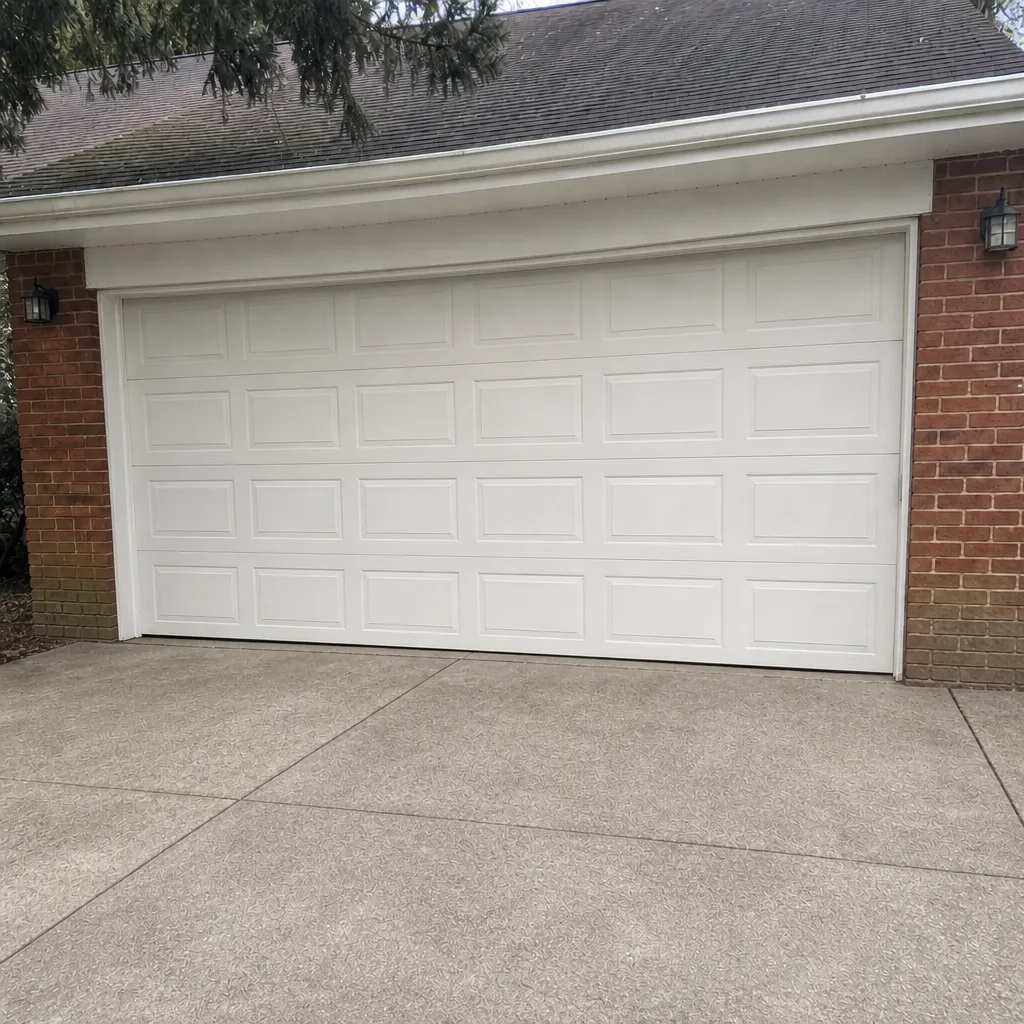 After
When to Call a Professional
Call a professional for anything involving springs, cables, drums, or the bottom bracket – that part isn’t negotiable. Also call when a door has come off the track, when the door is uneven when it opens (one side rising before the other), when the opener won’t reverse on contact with an obstruction, or when any part of the door system has obvious visible damage from impact or settling. If you’ve had the door balanced by hand and it won’t stay halfway, the springs are out of adjustment and it’s a professional job. Same if the door panel is bent badly enough that it doesn’t sit flush against the weather seal.
For anything in that list, Silver Spring Garage Door Repair offers free estimates in Silver Spring – call (877) 357-8434. We answer 24/7. Fast dispatch from 7am to 7pm, Sunday through Friday. The price is quoted before work starts, and we work on the brand you already have – Chamberlain, LiftMaster, Genie, Craftsman, Clopay, Amarr, Wayne Dalton, and Raynor.
Frequently Asked Questions
No. Torsion and extension springs store enough energy to cause serious injury or death if released incorrectly, regardless of how handy you are. The job requires specific winding bars, knowledge of the winding direction, and the ability to set tension by counting quarter-turns – none of which are things a homeowner can safely improvise. Call (877) 357-8434 for a spring repair estimate. Estimates are free.
Torsion spring repair in Silver Spring typically runs $180-$340 for one spring, and a matched pair is usually replaced together so a pair runs about twice the single-spring range. The written estimate sets the final price before work starts. Call (877) 357-8434 for an exact quote. Estimates are free.
Yes. The open-limit and close-limit screws on the opener body are safe homeowner adjustments and are the standard fix for a door that stops short or closes too firmly. Turn a quarter-turn at a time and test. If the door still doesn’t sit right, or the opener sounds strained, call (877) 357-8434 – estimates are free.
Possibly. Older Silver Spring homes often have non-standard spring diameters, mismatched spring pairs, or extension springs without restraint cables, which makes even “simple” jobs on the counterbalance system riskier than the online tutorials suggest. Safe maintenance tasks (lubrication, seals, sensors) are the same on any age of door. Spring, cable, and track work on a pre-1980s door should go to a professional. Call (877) 357-8434 for a free inspection if you’re not sure what you have.
It can, especially on spring, cable, or counterbalance work. Many door manufacturers require authorized installation or repair to keep the warranty valid, and a self-modified counterbalance system is usually an easy reason to deny a claim. Lubrication, seals, rollers, and opener programming usually don’t affect the warranty. Call (877) 357-8434 if you want a free check on what your specific door needs before you decide.
Handle safe maintenance yourself (lubrication, seals, sensors, opener programming) and call a professional for the risky jobs – that’s the cheapest path in the long run because it avoids the cost of a botched repair. A misdiagnosed opener, a mismatched spring pair, or a bent bottom bracket all cost more to fix after a DIY attempt than they would have from the start. Call (877) 357-8434 for a free estimate on anything you’re unsure about.
The Bottom Line
The DIY-vs-professional question for a garage door isn’t about whether you’re handy. It’s about which tasks carry catastrophic injury risk and which don’t. Lubrication, seals, rollers, sensors, and opener programming are all safe homeowner projects that genuinely save money and extend component life. Springs, cables, drums, and bottom brackets are never DIY, no matter how confident you feel. If your Silver Spring home was built before the late 1980s, the calculation tilts further toward professional service because the parts and configurations are more likely to be non-standard. And when you do call, get the price in writing before work starts. That’s the number that matters.
For springs, openers, panels – one call to (877) 357-8434. We answer 24/7. Fast dispatch from 7am to 7pm, Sunday through Friday. Free estimates, upfront pricing, and technicians with up to 8 years of experience who work on the brand you already have.
Written by the team at Silver Spring Garage Door Repair.